
Career Outcomes - What Comes After The 4-Day Course
The wrap industry has a variety of career outcomes, and where you go after Toronto Wrap School’s 4-Day Course depends on how much you keep practicing, learning, and treating the certificate as a starting point rather than a finish line.
Below is a general picture of where graduates tend to go, how the industry pays, and what additional training is available once you have your fundamentals.
The First 6 To 12 Months After the 4-Day Intensive Course
Most graduates do not walk out of the course and start charging full retail rates the next week. The wrap industry rewards repetition, and the early months are where that repetition happens.
Common early-stage activities:
- Practicing on personal vehicles, friends' cars, and panels at home to reinforce technique
- Taking on smaller paid jobs at reduced rates to build a portfolio
- Working as a junior or assistant installer at an established shop
- Building a social media presence with photos of completed work
- Adding wrap services as an introductory offer inside an existing detailing or automotive business
This stage is where speed, confidence, and finish quality develop. Installers who skip it tend to struggle. Installers who commit to it tend to find their footing within a year.

Get Hired At A Wrap Shop
The most common starting point.
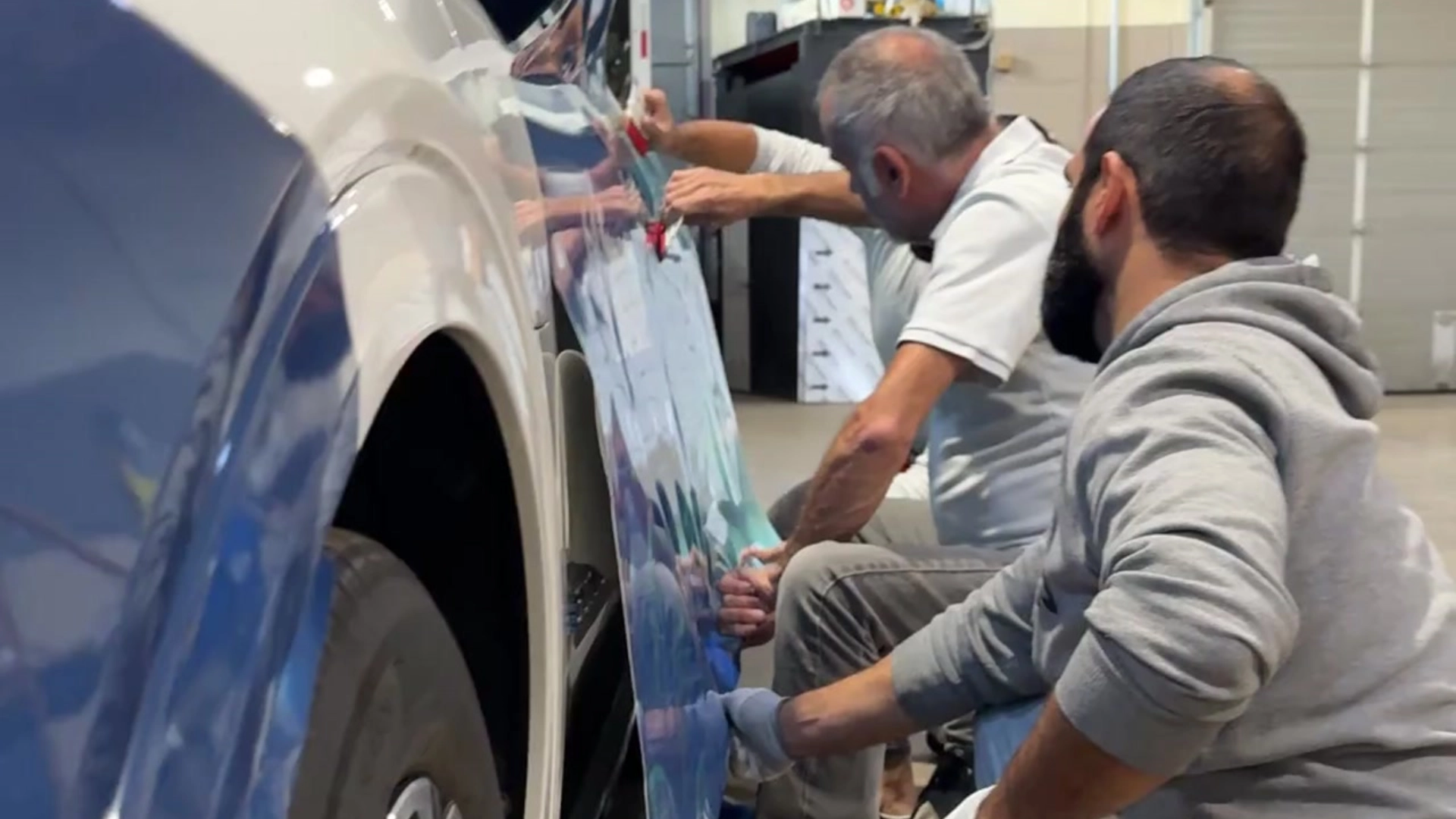
Established wrap shops in the GTA regularly hire junior installers to support senior staff, handle prep work, and take on simpler panels under supervision.
What shops typically look for:
- Demonstrable hands-on experience and a portfolio of practice work
- Familiarity with cast and calendared films
- Clean prep habits and proper tool handling
- Reliability, schedule flexibility, and willingness to learn shop-specific workflow
A junior position is not the end of the path. It is how most full installers in Ontario built their skill set. Many shop owners started exactly this way.
Add Vinyl Wrap To An Existing Automotive Business
If you already operate a detailing studio, body shop, PPF business, or automotive customization shop, vinyl wrap is one of the highest-margin services you can add.
Why it works:
- You already have the client base and the facility
- Wrap services pair naturally with detailing, PPF, ceramic coating, and tint
- A single installer can add a meaningful new revenue stream without major capital investment
- Existing customers are often easier to convert than cold leads
This path has a lower barrier to entry because the business infrastructure already exists. The course gives you the technical foundation, and your existing operation gives you the demand.
Start An Independent Wrap Service
The path that gets the most attention online and the most attrition in practice. It is achievable, but it requires more than installation skill.
What independent wrap operators need to develop:
- Reliable installation quality across a range of vehicles and panels
- A workspace that meets climate and lighting requirements
- Pricing structure, quoting process, and client communication
- Marketing channels that produce consistent leads
- Material sourcing relationships with film distributors
- Business fundamentals: insurance, taxes, contracts, deposits, scheduling
Most successful independent installers in Ontario built up to this through one of the first two paths. This career path is best viewed as a long term goal, built up through experience, financial resources, and risk.
How Wrap Installers Get Paid
Income models in the wrap industry vary significantly. Understanding the structures helps you evaluate opportunities and plan your own path.
There is no single answer to what a wrap installer earns in Ontario. There is a range, and where you land within that range is determined by the path you choose, the market you serve, and the speed at which you build skill.
Hourly Wage
Most common for junior and assistant installers at established shops. Predictable, lower ceiling, lower risk. Good for skill development.
Per-Panel Or Per-Job
Some shops pay installers a flat rate per panel or per completed vehicle. Speed and quality directly affect income. Common for mid-level installers.
Commission Or Revenue Share
Senior installers at some shops earn a percentage of the job value. Income scales with the shop's pricing and the installer's productivity.
Add-On Service Margins
For detailers, body shops, and PPF businesses, wrap is a service line. Income comes from the margin between material plus labour cost and the price charged to the client.
Independent Operator Pricing
Independent installers set their own rates based on vehicle type, film cost, complexity, and market positioning. Income depends entirely on volume and pricing discipline.
Advanced Training And Specializations
A 4-day intensive gets you to a working foundation. The wrap industry has multiple paths for installers who want to keep developing. Toronto Car Wrap offers a variety of these services.
Toronto Wrap School will be expanding its program offerings in the future, including specialized courses for graduates who want to continue developing their installation skill set.

Manufacturer Installer Certifications
Major film manufacturers offer their own certification programs for installers who want recognition tied to a specific brand. These programs typically require demonstrated installation experience and are pursued after, not before, foundational training.

Paint Protection Film (PPF)
The natural next specialization. PPF uses different materials, different application techniques, and commands higher margins than colour change vinyl. Most established shops offer both.

Window Tint
Often added alongside wrap services. Tint has its own techniques and regulatory considerations in Ontario, but the client overlap is significant.

Commercial Fleet Wraps And Graphics
A different category of work involving printed graphics, vehicle branding, and fleet-scale projects. Higher technical demands, different sales cycle, and recurring revenue potential.

Architectural And Specialty Wrap
Wrap films are now used on appliances, walls, elevators, retail interiors, and equipment. A smaller niche, but a growing one for installers who want to move beyond vehicles.

Advanced Vehicle Categories
Motorcycles, boats, RVs, and aircraft components all use wrap films and require specialized handling. These are typically pursued by experienced installers looking to expand their service range.
An Honest Note On Outcomes
Vinyl wrap installation is a skill, and like every skill, what you do with it depends on the work you put in after the course. Some graduates move into shops within months. Some add it to existing businesses and recover their tuition through the first few jobs. Some take longer. Some decide it is not the right fit and that is also a legitimate outcome.
What we can say with confidence is that demand for vehicle wraps continues to grow across Ontario, the GTA remains one of the most active wrap markets in Canada, and skilled installers are consistently in demand by shops, businesses, and clients across the region.
The 4-Day Intensive Course gives you the foundation. The path you build on top of it is yours.
$1,700 All-Inclusive
- Certificate Included
- Included Flexible Dates
Frequently Asked Questions
How much do vinyl wrap installers make in Ontario?
Pay varies widely. Entry-level shop installers in the GTA often start around a general range of $18 to $22 per hour, and salary aggregators put the Canadian average for vinyl wrap installers in the range of $49,000 to $52,000 per year. Senior installers, per-job earners, and independent operators can earn more depending on volume and pricing.
Is vinyl wrap installation a good career in Canada?
It can be, but only for people who treat it as a skilled trade. Demand across the GTA is steady, the work pairs well with detailing, PPF, and tint, and skilled installers are consistently sought by shops. The downside is a slow income curve in year one, physical work, and a market that rewards reps over credentials.
How long does it take to become a professional wrap installer?
A 4-day intensive course gives you the technical foundation. Most graduates need six to twelve additional months of consistent practice, smaller paid jobs, or junior shop work before installing full vehicles confidently at a professional standard. Anyone telling you the certificate alone makes you a finished installer is selling something.
Do I need a license or formal certification to work as a wrap installer in Ontario?
No provincial license is required to install vinyl wraps in Ontario. Most shops hire based on demonstrated skill and a portfolio rather than credentials. Manufacturer certifications from companies like 3M and Avery Dennison exist, but they typically require prior installation experience and are pursued after foundational training, not before.
What is the difference between a junior installer and a senior installer?
Junior installers handle prep work, simpler panels, and assist on full vehicles under supervision, usually on hourly pay. Senior installers run full builds independently, work faster, manage complex panels and recessed areas, and often earn through per-job rates or revenue share. The gap is closed through repetition, not seniority alone.
Can I start my own wrap business right after the course?
Most installers who succeed independently spend time at a shop or inside an existing automotive business first. Independent operation requires installation consistency across vehicle types, a controlled workspace, pricing discipline, lead generation, insurance, and material sourcing. The course covers technique. Business infrastructure has to be built separately.